Skip to content

FIRST ANNUAL · SCHOOL ALIVE

Black Tie Gala & Auction

Saturday, October 10, 2026

5–9 PM · Purdue Memorial Union

Search
Settings

Make yourself at home.

Language / Idioma

THE FRAMEWORK

Seven disciplines.
Passion at the center.

Authentic HAMSTER® Education connects classical wisdom with contemporary innovation—beyond STEM, STEAM, and STREAM.

“Education is not a subject and does not deal in subjects. It is instead a transfer of a way of life.”

G. K. Chesterton

What Does “Authentic” Mean?

Authentic means being what something claims to be: genuine, true, and worthy of trust. In education, that means connecting what students learn with reality, purpose, and the people they are becoming.

At School Alive, relationships shape the environment, and the environment makes meaningful experiences possible. Select a level below to see how the whole system connects.

THE WHOLE SYSTEM

Authentic Education

Administration, teaching, and learning working toward one meaningful purpose.

Authentic AdministrationLeadership & conditions

Leadership makes the mission possible in daily practice.

  • Align vision, culture, policies, schedules, and resources.
  • Build relationships and environments where teaching and learning can flourish.
  • Use evidence from classrooms to improve the wider system.
Authentic TeachingGuidance & experience

Teachers connect sound knowledge with meaningful learning experiences.

  • Explain, model, guide, and challenge with care.
  • Provide practice, feedback, reflection, and opportunities to apply learning.
  • Adapt instruction to learners while keeping truth, rigor, and purpose in view.
Authentic LearningThe learner’s experience

Learners engage with knowledge, practice, people, and purpose. They question, remember, apply, create, reflect, and contribute.

Explore the Learning Approaches

Authentic learning is the umbrella, not a single teaching method. These approaches can contribute when they connect knowledge, practice, people, and purpose.

Montessori Learning
Purposeful activity, prepared environments, and growing independence.
Experiential & Situated Learning
Learn through experience and participation in meaningful contexts.
Project-, Problem- & Case-Based Learning
Investigate a question, address a challenge, or study a real situation.
Inquiry & Discussion
Ask thoughtful questions, examine evidence, and reason with others.
Service & Place-Based Learning
Connect learning with the needs and places of a community.
Collaborative Learning
Work with others toward shared understanding and responsible contribution.
Simulation, Immersion & Story
Use models, rich environments, and narrative to encounter ideas and perspectives.
High-Impact Learning & Mentorship
Deepen learning through sustained projects, feedback, relationships, and practice.

Direct instruction, reading, memorization, and practice also have a place. A method’s label alone does not make learning authentic; its purpose and quality matter.

A Unifying Vision of Education

The aim is a “theory of everything” for education in the sense of a shared framework: bringing valuable approaches together around the formation of the whole person. It is a guiding vision, not a claim that one method answers every educational question.

For School Alive, that purpose is rooted in Christ. Knowledge, wisdom, character, and developing gifts belong together, directed toward faithful service.

CLASSICAL WISDOM. CONTEMPORARY INNOVATION.

Authentic HAMSTER Education

Seven disciplines. Every subject. Connected through meaningful work, with student passion at the center.

STEMScience, Technology, Engineering & Mathematics
STEAMAdd Art
STREAMAdd Religion in our Christian approach
HAMSTER®Add Healthcare. Connect all seven through Passion.

Choose a discipline to explore.

Passion connects it all.

A meaningful question or project brings the disciplines together. Students discover their God-given gifts and put them to work in service to others.

EXPLORE THE SEVEN DISCIPLINES

Healthcare Caring

Caring for people through the prevention, treatment, and management of illness—and the preservation of physical, mental, and spiritual well-being.

Includes Nutrition, movement, first aid, emotional well-being, and caring for others.

A learning example Plan a nourishing meal, explain its health benefits, and prepare it to serve someone else.

Art Colorful

Using the imagination to create and appreciate beauty through forms, sounds, and words. Art includes language, literature, and the performing and visual arts.

Includes Reading, writing, languages, music, theater, drawing, and design.

A learning example Write and illustrate a story, then bring it to life through a performance.

Mathematics Calculated

Understanding quantities, measurements, patterns, and relationships through calculation and logical reasoning.

Includes Number, measurement, geometry, algebra, data, and logical thinking.

A learning example Measure a garden plot, calculate its area, and work out the quantities and costs of materials.

Science Curious

Discovering, testing, and organizing knowledge through systematic inquiry. Students observe, ask questions, investigate evidence, and develop explanations for the natural world.

Includes Biology, chemistry, physics, earth and space science, and environmental inquiry.

A learning example Investigate how light affects plant growth, record observations, and use the evidence to explain the results.

Technology Clever

Understanding and using the tools, knowledge, processes, and techniques that people develop to achieve goals—including the people who create and use them.

Includes Physical and digital tools, computing, technical processes, and responsible use.

A learning example Compare tools for recording observations and choose the one that best serves the task.

Engineering Creative

Applying knowledge and practical judgment to design, build, test, and improve products and processes that solve problems within real limits.

Includes Design criteria, constraints, prototypes, testing, and iterative improvement.

A learning example Build a model bridge to meet a load requirement, test it, and improve the design within a materials budget.

Religion Communal

Exploring sincere beliefs and practices concerning the sacred and the cause, nature, and purpose of the universe. At School Alive, this inquiry is rooted in the truth of Scripture and our faith in Jesus Christ. This is also where our students primarily explore history, citizenship, and how moral beliefs shape laws and societies.

Includes The Bible, Christian theology, worldview, worship, ethics, and service; social studies, government, citizenship, history, and world civilizations.

A learning example Compare how two civilizations organized society, then examine how their beliefs about right and wrong shaped their laws and responsibilities of citizenship.

Passion Central

Passion is the deeply-rooted love for a specific calling that not only fuels intense emotional commitment but also demands the willingness to make sacrifices, embodying the balance between fervor and the conscious choice to "pick up one's cross" for a greater purpose.

Passion is the center of the wheel, rather than an eighth fundamental discipline. Students discover and develop God-given gifts, guided by truth, responsibility, and service to God and others.

Includes God-given gifts, purposeful projects, practice, mentorship, perseverance, and service.

A learning example Develop a passion for music by studying sound, practicing an instrument, planning a performance, and sharing it in service to others.

ONE PROJECT. MANY CONNECTIONS.

What could a garden teach?

Care for the people it feeds. Tell its story. Measure its beds. Study what grows. Choose your tools. Design an irrigation system. Reflect on stewardship and service.

PASSION: From Interest to Purpose

Passion Period gives students guided time to explore their gifts and pursue meaningful work. The PASSION process helps turn curiosity into contribution.

  1. Ponder

    Notice interests, questions, needs, and opportunities. Make room for curiosity, prayer, and reflection.

  2. Align

    Bring interests into alignment with truth, Scripture, responsibility, and service to others.

  3. Select

    Choose a meaningful project or goal and identify what will show growth.

  4. Strategize

    Plan the steps, time, resources, guidance, and checkpoints needed to begin.

  5. Implement

    Create, practice, test, or serve. Turn the plan into action with support and accountability.

  6. Optimize

    Seek feedback, reflect honestly, and revise the work so it better serves its purpose.

  7. Network

    Share learning, connect with mentors and community, and put developing gifts to work for others.

This is a flexible process. Students can return to an earlier step as they learn, receive counsel, or discover a better direction.

Discover Student Life

Scripture on Passion, Desire & Purpose

Read the Passages & Reflection

Scripture both warns against misdirected desires and calls us toward faithful devotion. Read these passages in that wider context.

  1. Romans 1:26 - For this reason God gave them up to dishonorable passions. For their women exchanged natural relations for those that are contrary to nature...
  2. Galatians 5:24 - And those who belong to Christ Jesus have crucified the flesh with its passions and desires.
  3. Colossians 3:5 - Put to death therefore what is earthly in you: sexual immorality, impurity, passion, evil desire, and covetousness, which is idolatry.
  4. 1 Thessalonians 4:5 - Not in the passion of lust like the Gentiles who do not know God.
  5. 2 Timothy 2:22 - So flee youthful passions and pursue righteousness, faith, love, and peace, along with those who call on the Lord from a pure heart.
  6. Titus 2:12 - Training us to renounce ungodliness and worldly passions, and to live self-controlled, upright, and godly lives in the present age.
  7. Titus 3:3 - For we ourselves were once foolish, disobedient, led astray, slaves to various passions and pleasures, passing our days in malice and envy, hated by others and hating one another.
  8. James 4:1 - What causes quarrels and what causes fights among you? Is it not this, that your passions are at war within you?
  9. James 4:3 - You ask and do not receive, because you ask wrongly, to spend it on your passions.
  10. 1 Peter 1:14 - As obedient children, do not be conformed to the passions of your former ignorance.
  11. 1 Peter 2:11 - Beloved, I urge you as sojourners and exiles to abstain from the passions of the flesh, which wage war against your soul.
  12. 1 Peter 4:2-3 - So as to live for the rest of the time in the flesh no longer for human passions but for the will of God. For the time that is past suffices for doing what the Gentiles want to do, living in sensuality, passions, drunkenness, orgies, drinking parties, and lawless idolatry.

These verses generally emphasize the negative connotations of sinful, uncontrolled passions (typically connected with fleshly desires or lusts). However, the context of the word "passion" in Scripture suggests that passions should be surrendered to the will of God, transformed, and redirected toward godly purposes.

The phrase “Ignite Your Passion” can be understood in a way where the focus is on transforming and redirecting passions. In this sense, “igniting” could imply a refining or burning away of worldly, sinful passions, which are often warned against in Scripture, and instead, fueling a new passion for God and His purposes.

The Bible speaks of both purifying and reorienting passions (Romans 12:11). This could be understood as igniting godly passion, replacing sinful desires with fervor for God’s work. 2 Timothy 1:6 talks about “fanning into flame” the gift of God, suggesting a proactive effort to stir up or ignite godly passion in our lives.

“Ignite Your Passion” could symbolize letting go of (or burning up) worldly passions and replacing them with a zeal and fire for God. This aligns with Galatians 5:24, which speaks of crucifying the flesh with its passions and desires, and could suggest that once those sinful passions are laid aside, we are free to burn brightly for God’s kingdom.

This approach to the phrase helps communicate that true passion is not self-serving or worldly but is transformed by the Holy Spirit for God’s glory. Passion becomes a deeply-rooted love for a specific calling, fueling a commitment that balances fervor with the willingness to “pick up one’s cross” for a greater purpose (Matthew 16:24), just as Christ demonstrated in His passion for our salvation.

What Makes Learning Authentic?

GPS-T offers four connected lenses for designing and reflecting on learning. Each holds three PIE characteristics: twelve ideas that work together.

Genuine DesignHow is learning designed?
Planning
Connect clear goals, foundational knowledge, real-world purpose, and evidence of learning.
Implementation
Put learning into practice through meaningful work, with appropriate guidance and support.
Evaluation
Use feedback, reflection, and evidence of growth to improve the process and the work.
Purposeful GuidanceHow are learners guided?
Progress
Set meaningful goals and take the next step through practice and useful feedback.
Inspiration
Awaken curiosity and purpose through encouragement, example, and worthy challenges.
Expertise
Bring accurate knowledge, sound judgment, and skilled guidance to the learning experience.
Structured CommunicationHow do people learn together?
Partnership
Build trust and shared responsibility with students, families, teachers, and mentors.
Integration
Connect disciplines, perspectives, and real-life contexts while respecting their differences.
Expression
Make thinking visible through questions, discussion, writing, presentation, and creative work.
Transcendent FormationWho are students becoming?
Passion
Cultivate purpose, ownership, and perseverance beyond a moment of excitement.
Integrity
Practice honesty, responsibility, and consistency between words and actions.
Eternity
Look beyond immediate performance toward truth, calling, and service to God and neighbor.

These are lenses for thoughtful practice, not a checklist that every lesson must satisfy equally.

Go Deeper

Full Discipline Descriptions
Healthcare — Caring

🏥 Caring Healthcarist

H ealthcare is the prevention, treatment, and management of illness as well as the preservation of physical, mental, and spiritual well-being.

Example Habits

  • Regular Exercise
  • Meal Planning
  • Wellness Check
  • First Aid Training

Example Overview

  • Level 1: Basic hygiene practices, such as hand washing and brushing teeth
  • Level 2: Nutrition and healthy eating habits
  • Level 3: The human body and its functions
  • Level 4: First aid and emergency response
  • Level 5: Disease prevention and management
  • Level 6: Mental health and wellness
  • Level 7: Global health issues and healthcare systems

Example Content

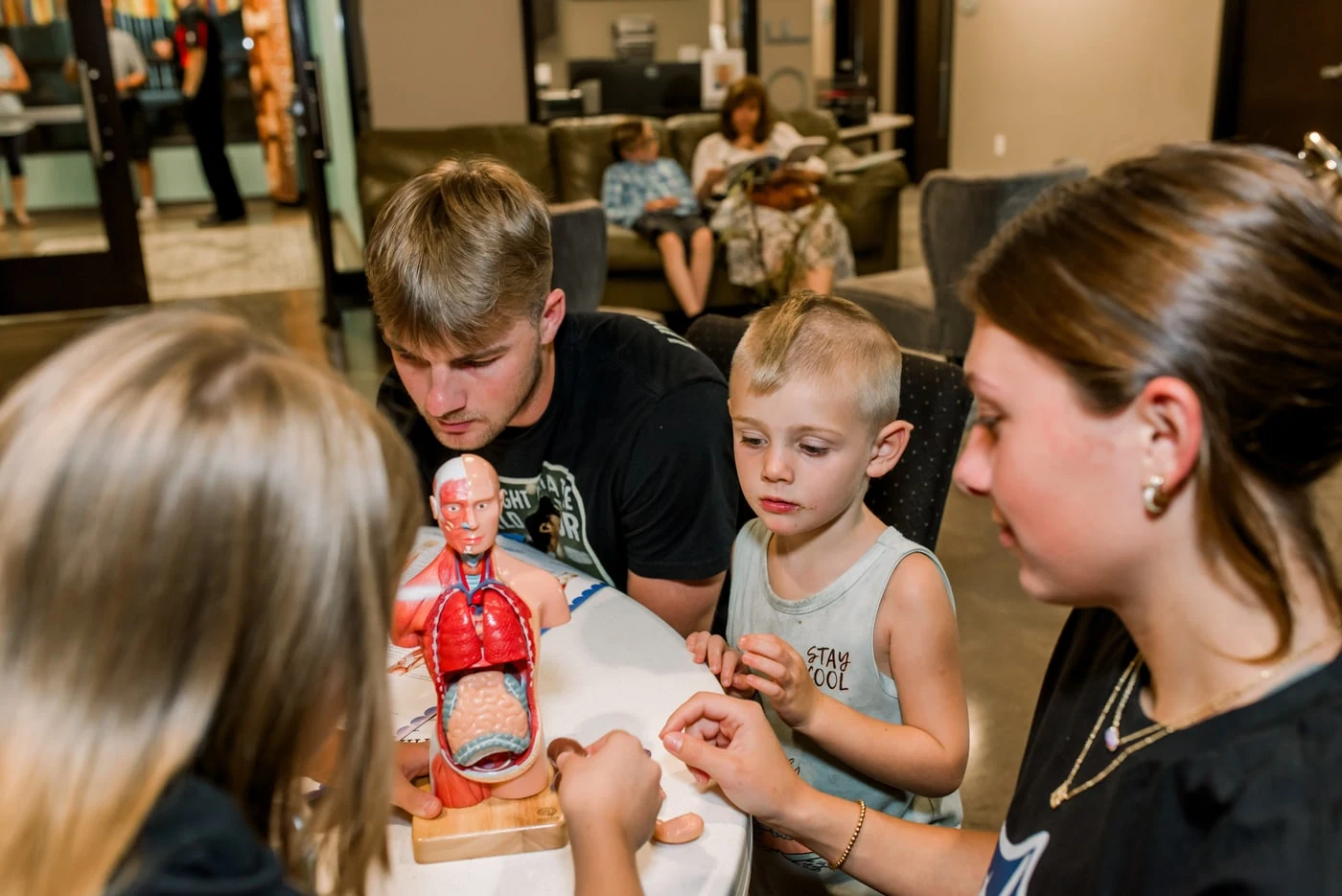
Health Science

  • Anatomy & Physiology
  • Epidemiology & Public Health
  • Toxicology & Pharmacology
  • Body Systems (ex. Digestive)
  • Structure & Function
  • Diagnosis & Prognosis
  • Blood Type (ABO and Rh system)
  • Blood Pressure (Systolic/Diastolic)
  • Human Development (Conception to Death)

Personal Healthcare

  • Exercise (ex. Biking, Running, and Lifting)
  • Nutrition (ex. Diet, Cooking, Farming, Gardening)
  • Food Preservation (ex. Canning, dehydration, freeze drying, vacuum sealing)
  • Emergency Preparedness and Safety
    • Preparedness and Survival
    • Firearm Safety and Self Defense
    • First Aid (CPR, AED, Choking)
  • Human Sexuality & Natural Family Planning
  • Interpersonal Relationships
  • Caretaking and Empathy (ex. Pets, Bedside Manner, Hospitality)
  • Hygiene (ex. Cleaning, brushing/flossing teeth, coughing, sneezing)
  • Over-The-Counter (OTC) Medications

Clinical Healthcare

  • Health Insurance
  • Life Insurance
  • Specialties
    • Pathology (Diseases)
    • Neurology (Brain)
    • Anesthesiology
    • Dermatology (Skin)
    • Oncology (Cancer)
    • Ophthalmology (Eyes)
    • Veterinary Medicine (Animal)
    • Dentistry (Oral/Mouth)
    • Clinical psychology (Mind)
    • Biblical counseling (Spirit)
  • Prescription Medications
    Art — Colorful

    🎨 Colorful Artist

    A rt is the conscious use of the imagination in the production of objects intended to be contemplated or appreciated as beautiful, as in the arrangement of forms, sounds, or words.

    Example Habits

    • Sketching, Doodling, or Journaling
    • Creative Writing and Language Learning
    • Attending Art Exhibits/Museums
    • Listening to Different Genres of Music

    Example Overview

    • Level 1: Basics of grammar, colors, shapes, and rhythm
    • Level 2: Introduction to drawing, storytelling, and simple choreography
    • Level 3: Merging shading techniques with poetry and basic stage presence
    • Level 4: Exploring the Renaissance's influence on various art forms
    • Level 5: Landscape painting paired with classical literature and musical themes
    • Level 6: Integrating graphic design, screenplay writing, and electronic music
    • Level 7: Comparative critique across language, visual, and performing arts

    Example Content

    Language Arts

    • Fiction (Not Factual) Books
    • Literature
    • Poetry
    • Reading
    • Writing
    • Riddles
    • Public Speaking
    • Communication
    • Paragraphs, Sentences, Phrases, Words, Letters

    Visual Arts

    • Symmetry
    • Painting
    • Drawing
    • Sculpting
    • Ceramics
    • Sewing
    • Beauty
    • Food Art
    • Colors

    Performing Arts

    • Art of War
    • Art Show
    • Talent Show
    • Play
    • Musical
    • Comedy (Vehicle for Truth)
    • Magic
    • Entertainment
    • Music
    • Martial Arts
    • Chorus
    • Singing
    • Gymnastics
    • Dance
      Mathematics — Calculated

      🎲 Calculated Mathematist

      M athematics is the calculation, measurement, properties, and relationships of quantities as well as logical reasoning and pattern recognition.

      Example Habits

      • Solving Math Puzzles
      • Budget Planning
      • Review of Personal Finances
      • Keeping a Problem-Solving Journal

      Example Overview

      • Level 1: Simple counting, addition, subtraction, and money concepts
      • Level 2: Multiplication, division, budgeting, and measurement
      • Level 3: Fractions, decimals, percentages, and variables
      • Level 4: Algebra, Geometry, equations, and growth/decay models
      • Level 5: Statistics, Trigonometry, Calculus, and compound interest
      • Level 6: Differential Equations, Linear Algebra, and Financial Risk Analysis
      • Level 7: Advanced concepts and proofs with real-world applications

      Example Content

      Pure Mathematics

      • Calculus
      • Differential equations
      • Trigonometry
      • Geometry
      • Probability
      • Algebra
      • Statistics
      • Logic, Reasoning, & Proofs
      • Patterns
      • Graphing
      • Fractions, Decimals, & Percentages
      • Multiplication & Division
      • Addition & Subtraction
      • Counting & Numbers

      Applied Mathematics

      • Mathematical Science (ex. Physics, Forensics)
      • Mathematical Technology (ex. Calculator, Abacus, Desmos)
      • Pareto distribution
      • Moore's law
      • Murphy's law
      • Normal curve
      • Fibonacci sequence
      • Logistic and Exponential Growth and Decay
      • Economics
      • Compound Interest
      • Financial literacy
      • Give, Save, Spend, Invest
      • Budget
      • Business
      • Supply & Demand
      • Loans
      • Debt
      • Grants
      • Taxes
      • Accounting
      • Money
        Science — Curious

        🔬 Curious Scientist

        S cience is the systematic discovery, construction, and organization of knowledge as a continuous exploration of mysteries in pursuit of predictive and explanatory power.
        Example Habits

        • Nature Walks to Observe Flora and Fauna
        • Experiments, Investigations, Research, Socratic Seminars
        • Book Reading on Various Scientific Topics
        • Mind Maps and Keeping an Inquiry Journal

        Example Overview

        • Level 1: Introduction to the natural world and the scientific method
        • Level 2: Earth science and geology
        • Level 3: Biology and ecosystems
        • Level 4: Chemistry and the periodic table
        • Level 5: Physics and mechanics
        • Level 6: Astronomy and cosmology
        • Level 7: Cutting-edge research and scientific breakthroughs

        Example Content

        Science Practices

        • Curiosity and Questions
        • Scholarship
        • Non-Fiction (Factual) Books
        • Peer-Reviewed Research Journals
        • Science Fair
        • Methodology
        • Exploration & Experimentation
        • Tests & Evidence
        • Observation & Nature
        • Review & Revise

        Science Research Process (SRP)

        • Purpose
        • Background
        • Hypothesis
        • Methods
        • Analysis
        • Findings
        • Report

        Natural Science

        • Physical Science
          • Physics
          • Chemistry
          • Ex. Matter, Atoms, Molecules, Compounds, Density, Reactions, Energy, Motion
        • Earth and Space Science
          • Geology
          • Astronomy
          • Meteorology
          • Climate
        • Life Science
          • Biology
          • Genetics
          • Zoology
          • Psychology
          • Ex. Microevolution, Cell theory, Biomolecules such as DNA, Origin of Life, Intelligent Design

        Social Science

        • Political Science
        • Historical Science
        • Anthropology
        • Law
        • Biography
        • Geography
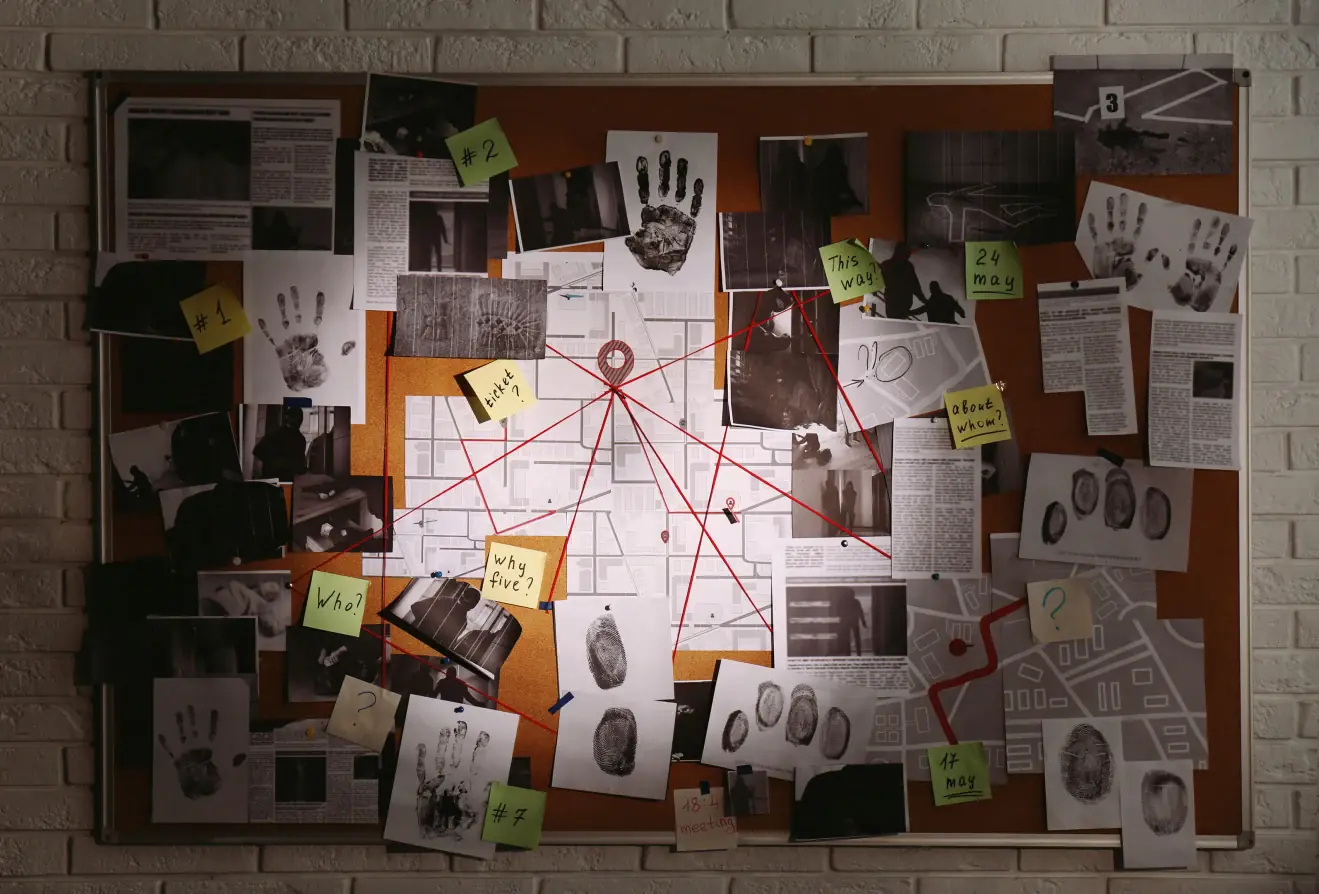
        • Forensic Science
        • Family and Consumer Science
          Technology — Clever

          🖥 Clever Technologist

          T echnology is the sum of objects, tools, knowledge, processes, products, techniques, developers, and users emerging from and driving goals.

          Example Habits

          • Keyboard Skills & Programming Languages
          • Exploration of New Software or Apps
          • Updates and Security Checks on All Devices
          • Review of Emerging Technologies

          Example Overview

          • Level 1: Basic computer skills and internet safety
          • Level 2: Software applications and programming fundamentals
          • Level 3: Web design and development
          • Level 4: Mobile app development and user experience
          • Level 5: Data analytics and machine learning
          • Level 6: Robotics and automation
          • Level 7: Emerging technologies and their impact on society

          Example Content

          Using Existing Technology

          Artificial Intelligence (AI)

          Virtual Reality (VR) & Augmented Reality (AR)

          Machine Learning & Deep Learning

          Generative Technology

          • Language (Chat GPT)
          • Image (DALL-E)

          Productivity Technology

          • Docs/Word
          • Sheets/Excel
          • Slides/PowerPoint

          Audiovisual Media Technology

          • Game (Unity)
          • Video (DaVinci Resolve)
          • Raster Image (GIMP)
          • Vector Image (Inkscape)
          • Audio (Audacity)

          Robotics (Vex, First, Other)

          Microcontrollers (Arduino & Raspberry Pi)

          Coding Languages and Frameworks

          Computers and Computer Hardware/Software

          Front-End & Back-End Application Development

          User Interface (UI) and User Experience (UX) Design

          Information Technology (IT)

          Educational Technology & Games

          Internet Safety & Cybersecurity

          Cloud Computing & Data Storage Solutions

          Database Management

          Internet of Things (IoT)

          LED lighting

          Automation

          Self-driving vehicles

          Educational Technology & Games

          Basic Tools & Technology Toys

            Engineering — Creative

            🔨 Creative Engineerist

            E ngineering is the application of knowledge and heuristics to iteratively design, develop, and implement products and processes defined by criteria under constraints to solve problems, meet society’s needs, and advance the state of the art.

            Example Habits

            • Engineering Design Challenge
            • Keeping an Engineering Notebook
            • DIY Projects and Engineering Design Process
            • Building or Tinkering with Physical Models

            Example Overview

            • Level 1: Introduction to design with reverse engineering
            • Level 2: Simple machines and mechanics
            • Level 3: Electrical circuits and electronics
            • Level 4: Construction skills and building structures
            • Level 5: Material science and engineering design
            • Level 6: Sustainable design and renewable energy
            • Level 7: Innovative engineering solutions to complex problems

            Example Content

            Engineering Practices

            • Creativity and Problems
            • Developing New Technology
            • Smart Goals & Project Management
            • Criteria & Constraint
            • Iterative & Cyclical Process

            Engineering Design Process (EDP)

            • Identification
            • Specification
            • Ideation
            • Prototyping
            • Delivery
            • Maintenance
            • Redesign or Retirement

            Projects

            • Community Partnership and Stakeholders
            • Engineering Projects in Community Service (EPICS)
            • Vertically Integrated Projects (VIP)

            Specializations

            • Civil Engineering
            • Biomedical Engineering
            • Mechanical Engineering
            • Electrical Engineering
            • Structural Engineering
            • Aerospace
            • Architectural

            Trades and Technical Skills

            • Carpentry
            • Plumbing
            • Welding
            • Electrical Installation
            • Energy Resources

            Computer-Aided Design (CAD)

            • Onshape, FreeCAD, Sketchup, Solidworks, Fusion 360, etc.

            Computer-Aided Manufacturing (CAM)

            Computer Numerical Control (CNC)

            Additive and Subtractive Manufacturing Techniques

            • 3D Printing, Laser Cutting, Milling, etc.

            Design Challenges & Reverse engineering

            Interior/Exterior Design and Floorplanning

            Material Science & Testing

            Renewable Energy & Sustainability

            Legos, Gears, Blocks

              Religion — Communal

              ♾️ Communal Religionist

              R eligion is the system of sincere beliefs and behaviors that recognize the sacred which is set apart from society as extraordinary, inspiring awe, and deserving of reverence while establishing a worldview revolving around the cause, nature, and purpose of the universe.

              Example Habits

              • Devotional, Prayer, or Spiritual Journaling
              • Attendance of Religious Services or Gatherings
              • Volunteering or Charity Work
              • Bible Study and Reading for Spiritual Growth

              Example Overview

              • Level 1: God's love and care for us
              • Level 2: Biblical stories and their meanings
              • Level 3: The life and teachings of Jesus Christ
              • Level 4: Comparative religion and philosophy
              • Level 5: Ethics and morality in religious traditions
              • Level 6: Interfaith dialogue and advanced apologetics
              • Level 7: Religious diversity and its implications for global society

              Example Content

              Religion Practices

              • Prayer & Worship
              • Fellowship & Discipleship
              • Citizenship & Service
              • Ministry & Charity
              • Church & Small Groups

              Philosophy

              • Ontology (Being)
              • Epistemology (Knowledge)
              • Axiology (Aesthetics & Ethics, Value, Virtue, Morality, Manners, Etiquette)

              Theology

              • Apologetics (Defense)
              • Hermeneutics (Interpretation)
              • Eschatology (End Times)
              • Holy Trinity (Father, Son, Spirit)
              • Human Trinity (Body, Soul, Spirit)
              • Bible Study & Stories
              • Plan & Purpose
              • Gifts & Fruits of the Holy Spirit

              World Views

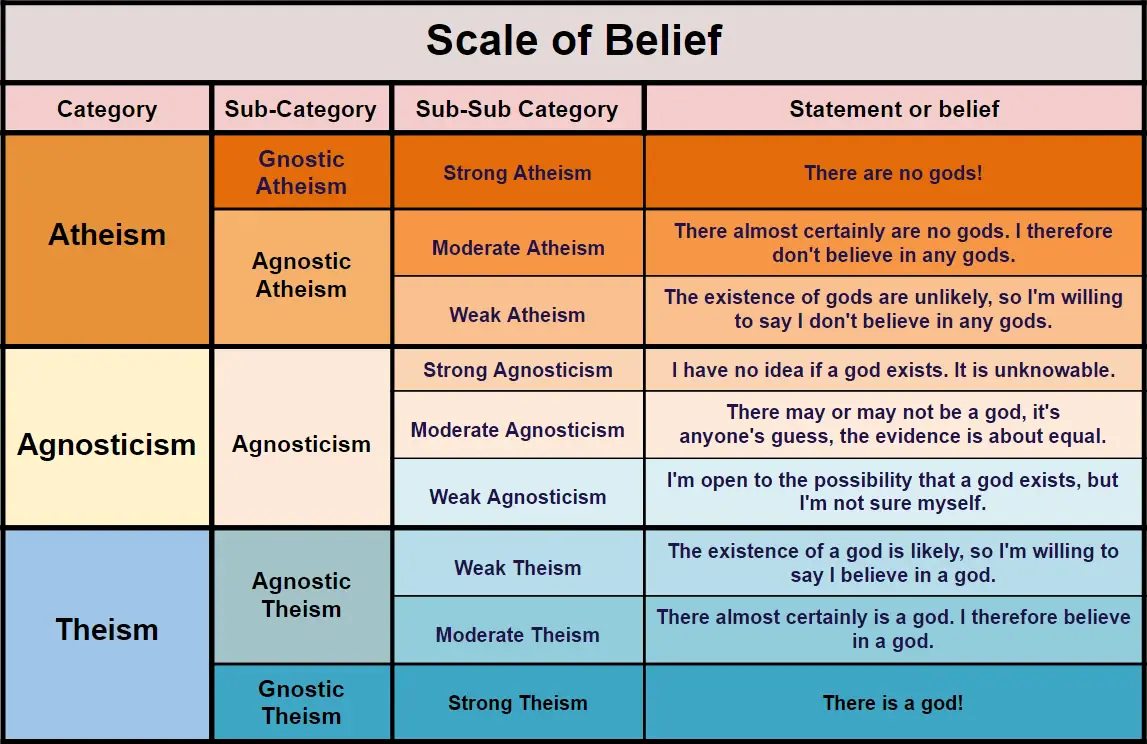
              • Atheism
              • Agnosticism
              • Theism
                • Monotheism
                • Polytheism
                • Pantheism & Deism

              World Religions

              • Abrahamic Religions
                • Christianity
                • Judaism
                • Islam
              • East Asian Religions
                • Taoism
                • Confucianism
                • Shintoism
              • Indian Religions
                • Jainism & Sikhism
                • Buddhism & Hinduism
              • Indigenous Religions
                • Native American (Navajo & Lakota)
                • Shamanism
              • Secular Religions
                • Humanism
                • Naturalism & Materialism
                • Scientism & Scientology
                • Existentialism & Nihilism

              World Ideologies

              • Patriotism
              • Capitalism & Marxism
              • Socialism & Communism
              • Modernism & Postmodernism
              • Nationalism & Globalism
              • Feminism & Environmentalism
              • Liberalism & Libertarianism
              • Conservatism & Progressivism

              Jesus Identity

              • Legend, Lunatic, Liar, or Lord (4 L)
              • What Did Jesus Do?
              • What Would Jesus Do? (WWJD)

              ALIVE Resurrection Evidence

              • A Death By Crucifixion
              • Ladies Find Tomb Empty
              • Independent Appearances After Death
              • Violence Endured By Apostles
              • Enemies Of Christ Converted

              MISTAKE Resurrection Theories

              • Mistaken Death (Swoon/He Never Died)
              • Imaginary Sightings (Mass Hallucination)
              • Spiritual Resurrection (No Physical)
              • Twin Deception (Secret Twin Died)
              • Alternate Tomb (Went To Wrong Tomb)
              • Kidnapped Corpse (Missing/Stolen Body)
              • Engineered Plot (Conspiracy/Intentional Lie)

                The Thinking Behind the Practice

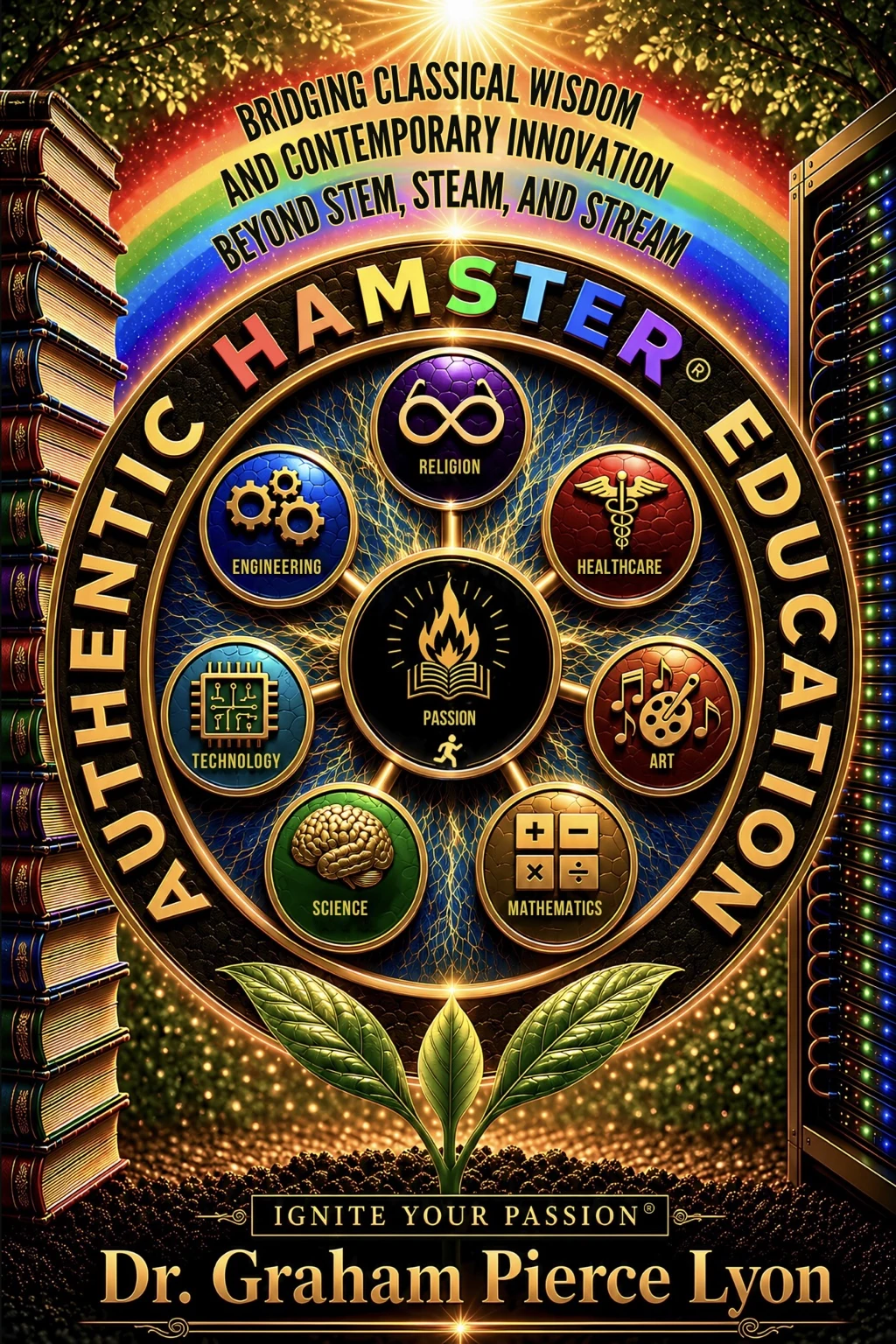
                Authentic HAMSTER Education book cover

                Authentic HAMSTER® Education

                By Dr. Graham Pierce Lyon. A Christian vision of education that recovers wisdom, honors families, and turns learning toward faithful service.

                Doctoral Dissertation

                Dr. Lyon’s Research on Authentic Learning

                Read Dr. Graham Pierce Lyon’s doctoral research on authentic learning.